On behalf of CSPI and MPP, Earthjustice recently filed a lawsuit in federal court against FDA for failing to respond to our 2011 petition requesting the Agency to give consumers clear, accurate and accessible information about mercury in seafood (as recent press reports explain.) The lawsuit seeks a court-ordered deadline since under its own regulations, FDA had 180 days to respond and its failure to do so violates federal law. In 2004, FDA acknowledged MeHg exposure risks when it issued an online advisory based on now outdated research. Several recent studies suggest adverse effects at exposure levels 10-fold lower than those considered acceptable a decade ago.
Category Archives: Events
In advance of mercury treaty adoption, ZMWG hair ‘snapshot’ shows worldwide exposure
A new ZMWG report highlights the importance of the new treaty being ratified as soon as possible to reduce global pollution and exposure to mercury. The treaty will be signed next week near Minamata, where a major mercury poisoning incident was first discovered. NGOs from 9 countries participated in the study in order to ascertain mercury hair levels in women. Nearly one-quarter (24%) of the samples exceeded the widely recognized U.S. EPA guideline of 1 μg/g. In 4 countries, a high percentage exceeded the threshold, specifically: 71% in Japan; 64% in Spain; 36% in Mauritius; and 23% in Côte d’Ivoire. “The results indicate that the mercury hair levels in Japanese women were significantly higher than the other countries tested,” said Dr. Takashi Yorifuji, Associate Professor at Okayama University Graduate School of Environmental and Life Science, Japan. “Risk of adverse health effects in children following in utero methylmercury exposures is well documented and rises as maternal exposure increases.”
Ahead of UN treaty negotiation, reports show greater mercury risks than earlier thought
The Zero Mercury Working Group, in cooperation with scientists from the Biodiversity Research Institute (BRI) and with other prominent scientists, organized a global webinar to release new findings that demonstrate extensive mercury contamination and summarize studies that show health effects from methylmercury occurring below the level that was considered “safe” just a few years ago. This comes ahead of the final round of United Nations negotiations, scheduled in January 2013, for a global mercury treaty. Slides from the webinar presentations are now available along with the reports: BRI report; Dr. Groth’s report for ZMWG and ZMWG summary/recommendations.
Global NGOs Urge EU to Phase Out Amalgam
Today, ZMWG, EEB, HEAL and HCWHE sent a letter sent to all EU Environment Ministers and Commissioners and Director Generals for Environment and Health, asking for support for phase-outs of mercury use in dentistry in the EU and globally. This was in response to the EU in 2011 conducting a full life-cycle assessment of mercury use in dentistry- mainly looking at the environmental effects caused. The study is expected to be completed by spring 2012. The EEB had sent its initial input on the study in September 2011.
3rd Mercury Negotiation in Nairobi
Leading up to the third Intergovernmental Negotiation Committee meeting in in Nairobi (31 Oct.- 4 Nov.), MPP director Bender will give a presentation tomorrow on ZMWG initiatives to reduce mercury globall at an international conference on environmental diplomacy and security.
WHO/FAO “Experts” Fails to Inform Nations About Mercury Exposure
The findings of a new WHO/FAO Report on Benefits and Risks of Seafood Consumption were challenged today by MPP as missing a key opportunity to advise governments about mercury risk from fish consumption. “Surprisingly, this expert group failed to address exposure concerns about fish with higher mercury levels, which have led to consumption advisories in the U.S. and around the world,” said MPP director Bender, in a statement. “The concept of ‘net benefits’ is severely flawed, because benefits accrue to everyone who eats seafood, but risks are concentrated in the small fraction of the population who regularly choose high-mercury fish,” said Dr. Ned Groth, an MPP science consultant. “It is not acceptable to tolerate significant harm to a minority just because the large majority are better off.”
Leadership needed on global mercury debate
As delegates from 117 countries concluded the second round of negotiations for a legally binding treaty on mercury, they welcomed Japan’s offer to host the 2013 diplomatic conference in Minamata where the convention will be signed, due to the unprecedented mercury epidemic in the 1950’s. However, NGOs from around the world urged them to truly honor Minimata by agreeing to adopt strong measures. “If the world’s governments really want to call this the “Minamata Treaty,” then they should back up their words with meaningful actions,” said Takeshi Yasuma, of Citizens Against Chemicals Pollution, a Japanese NGO, who worked closely with Minamata groups in raising awareness at the meeting and through the news media reports.
Although delegates generally agreed on a proposed basic framework for mercury reductions, they left most all substantive issues unresolved. According to a ZMWG statement, governments now need to exert strong leadership to: monitor and reduce emissions from coal-fired power stations and other industry and industry; phase out existing mercury mining and management of stored quantities; the classification and management of mercury waste; and critical also is resolving financial aspects of the future convention. After reviewing and summarizing comments on the draft UNEP framework document, interventions were made by ZMWG and other NGOs and recommended: expanding the list of mercury-based products and processes to be regulated under the treaty, providing explicit time lines for phase outs, reducing mercury content in lamps, and strengthening provisions on artisanal and small-scale gold mining, the largest mercury use in the world, among many others.
W.H.O. Lauded for Supporting Amalgam “Phase Down,” Ban on Hg in Cosmetics at INC
World governments today completed the first step towards a mercury treaty, issuing a meeting report and providing the basis for developing treaty text for INC2 in Japan in January 2011, according to ZMWG and press reports. NGOs lauded W.H.O. for supporting mercury reductions. “We applaud W.H.O.’s statement to stop production of skin cosmetics containing mercury, as they are an exposure risk worldwide ,” said MPP director Bender. “We welcome W.H.O’s interest in “phasing down” amalgam, which is reflective of the WHO meeting last fall, and consistent with what NGOs wrote to WHO on.” This may be of interest in the US as FDA decided yesterday to review amalgam risks.
Bring Back the Light
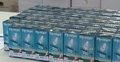
Efficiency Vermont Donated Bulbs
MPP and VPIRG are holding Bring Back the Light, an event where Vermonters can trade in their spent bulbs for new CFLs while supplies last. The event is to highlight long term, sustainable funding solution needed for a comprehensive bulb recycling program. 100 Free bulbs generously donated by Efficiency Vermont at each participating store. Participating stores are Nelson Ace Hardware, 190 N. Main St, Barre, VT 05641, and S. Burlington Ace Hardware, 1961 Williston Rd, South Burlington, VT 05403. Links for rationale on why to recycle bulbs, and locations in Vermont where there is free bulb recycling.
Special Screening of The Cove to Showcase “Mercury Rising” Bonus Feature
Concord, New Hampshire
Green Concord is hosting a post-film discussion panel and screening of The Cove at 7pm, Monday, Dec. 14, at Red River Theatres with MPP and other specialists who will speak about the specific issues in The Cove and be available for questions and answers. After the main viewing, MPP will show a segment of the bonus feature “Mercury Rising” that explores the dangers of mercury contamination as it affects society and the global environment. Mercury Policy Project and GotMercury recently introduced the new Cove-GotMercury mercury-in-fish calculator that allows people to check mercury exposure from fish on-line or from a cell phone based on their weight, fish type and serving size.